
The Wisconsin Institute for Law and Liberty lawsuit seeks to eliminate arbitrary teacher screening rules used by the Department of Public Instruction. If successful, this high-stakes legal challenge will force state education officials to implement transparent background checks and streamlined out-of-state reciprocity frameworks.
The high-stakes legal battle over educator screening protocols in local school districts has reached a critical turning point across the state.
The Wisconsin Institute for Law and Liberty is actively defending applicants who faced sudden, arbitrary rejections from state licensing department officials.
This comprehensive investigation breaks down the core legal arguments and explains how new court mandates will change future classroom hiring regulations.
Educators caught in the ongoing administrative backlog must track these shifting requirements to protect their professional employment options this year.
Critical Metrics of the Wisconsin DPI Screening Lawsuit
Navigating the complex teacher credentialing landscape requires tracking how current administrative procedures match up against the new pending judicial updates.
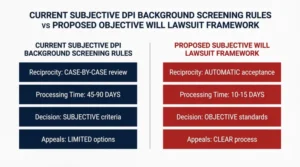
| Lawsuit Focus Area | Current DPI Screening Rule | WILL Legal Challenge Ground | Expected Operational Impact |
|---|---|---|---|
| Background Check History | Subjective moral character reviews | Violates candidate procedural due process | Mandatory objective review templates |
| Out-of-State Reciprocity | Arbitrary rejection of external tests | Creates unfair barriers for incoming teachers | Automated transfer windows for credentials |
| Administrative Appeals | No transparent independent review channels | Denies basic constitutional property protections | Establishment of external oversight boards |
| Processing Timelines | Indefinite delays without accountability metrics | Harms local district staffing operations severely | Strict statutory response deadlines for state |
The Core Elements of the WILL Legal Challenge
Attorneys argue that current state evaluation metrics systematically deny licenses to highly capable educators without providing a fair administrative review path.
The formal legal filing highlights specific instances where minor, decades-old infractions completely disqualified experienced teachers from receiving their classroom credentials.
This aggressive judicial pushback aims to force state administrators to adopt objective screening rules that respect basic constitutional due process protections.
Candidates currently navigating the complicated bureaucratic system are monitoring this specific court case closely for immediate legal relief options today.
Current Wisconsin DPI Screening Policies Under Fire
The Department of Public Instruction utilizes an expansive, highly subjective background review process to evaluate the moral character of teaching candidates.
Critics state that agency investigators routinely misinterpret historical misdemeanor records, leading to unfair, automated rejections for many qualified diverse individuals.
Furthermore, the current administrative framework lacks a clear, standardized path for applicants to appeal these subjective background check determinations directly.
This systemic lack of transparency forces damaged educators to spend thousands on outside legal representation just to clear their clean names.
How the Lawsuit Changes Teacher Background Checks
A favorable court ruling will instantly eliminate the unchecked subjective authority currently exercised by state department licensing investigators during initial intakes.
The judicial system may mandate the creation of an independent oversight board to review disputed applications before final denials occur.
This structural change would ensure that every single candidate receives a fair, impartial evaluation based on modern professional teaching standards.
Additionally, it could establish clear rehabilitation guidelines, allowing reformed individuals to successfully demonstrate their fitness for modern classroom environments.
Impact on Out-of-State Reciprocity Applicants
Educators relocating to Wisconsin face incredible hurdles when transferring their existing professional credentials from neighboring midwestern states under current rules.
The ongoing lawsuit specifically challenges the arbitrary rejection of valid out-of-state testing metrics by local public instruction department officials.
If the legal challenge succeeds, the state must streamline reciprocity guidelines, heavily reducing wait times for experienced incoming teaching professionals.
This critical policy shift could immediately help resolve the severe ongoing teacher shortages plaguing urban and rural Wisconsin school districts.
Strict Timelines for Disputed License Applications
Understanding the operational windows for responding to official department inquiries is absolutely essential for avoiding automatic permanent application rejections.
Candidates receiving an initial intent to deny letter must file a comprehensive formal response within thirty calendar days of notification.
Failure to submit required character references and legal explanations within this tight window results in immediate forfeiture of all fees.
Managing this paperwork with extreme precision protects your long-term employment eligibility while the broader federal lawsuit plays out in court.
Historical Teacher License Denial Statistics in Wisconsin
Recent data reveals a sharp, noticeable increase in administrative license rejections over the past three consecutive public academic testing cycles.
During the previous year, over four hundred applicants faced official licensing blocks due to subjective character and background review metrics.
This rising trend triggered widespread alarm among local education unions and directly prompted the current high-stakes constitutional law firm intervention.
Analyzing these troubling statistics underscores the critical necessity for comprehensive structural reform within the state educational department management hierarchy.
Step-by-Step Action Plan for Denied Educators
Facing an official licensing block can feel completely devastating, but candidates possess powerful legal avenues to fight back against rejections.
Executing a disciplined, strategic response plan ensures your professional rights remain fully protected throughout the extensive state administrative process.
1. Secure Certified Court Dispositions
Gather official physical copies of all historical legal records relating to the specific infractions cited in your department denial letter.
Ensure these documents clearly demonstrate the successful completion of all mandated court requirements, probations, and financial restitution obligations properly.
2. Collect Professional Character References
Request formal letters of recommendation from current school administrators, community leaders, and senior educational colleagues who know your work.
These references must directly testify to your excellent moral character, professional classroom competence, and dedication to modern student development.
3. Request an Official Administrative Hearing
Submit a formal, written demand for a full evidentiary hearing before an impartial administrative law judge within the state capital.
Use this legal venue to clearly present your rehabilitation evidence and challenge the subjective conclusions reached by department background investigators.
How Local School Districts React to the Lawsuit
Superintendents across the state are voicing deep concerns regarding how shifting certification standards will impact their immediate contract negotiation cycles.
Many local boards prefer local autonomy when deciding whether a background infraction should disqualify an applicant from working with children.
A centralized, rigid ruling could accidentally restrict a community school board from hiring trusted, reformed local leaders for open positions.
Consequently, district human resource directors are urging state administrators to maintain flexible regional variance options within any new ruleset.
The Role of Constitutional Law in Licensing Disputes
Legal analysts point out that professional credentials represent a protected property right under modern interpretations of constitutional law frameworks.
Denying or revoking these credentials without a transparent, fair hearing directly violates established procedural due process protections for workers.
The upcoming judicial review will force state attorneys to justify why their current administrative procedures bypass standard constitutional guarantees.
A victory for the plaintiffs would establish a powerful legal shield for licensed professionals fighting regulatory overreach across multiple industries.
Long-Term Solutions for the Educator Shortage Crisis
Reforming the background screening process is only the first step toward resolving the systemic staffing problems facing local modern schools.
State leaders must also invest heavily in mentorship programs to prevent highly qualified new teachers from leaving the profession early.
Combining fair legal protections with improved workplace conditions will ultimately ensure a steady supply of dedicated educators for future generations.
The Future of Educator Screening in the Midwest
The legal battle in this state is setting a massive precedent that could completely alter teacher screening rules across America.
Neighboring education departments are monitoring the ongoing courtroom arguments to anticipate potential changes to their own regional licensing frameworks.
Embracing fair, objective evaluation systems will ultimately elevate the entire teaching profession while keeping classrooms safe for all student groups.
As court dates approach, educational professionals must remain highly informed and actively participate in shaping these vital systemic changes.
FAQs –
Why is WILL suing the Wisconsin Department of Public Instruction?
The law firm is challenging the subjective background check rules that arbitrarily deny teaching credentials to qualified and experienced local applicants.
What is the minimum score required for a Wisconsin teaching license?
Candidates must pass the specific Praxis subject assessments with scores meeting the established state benchmarks for their individual certification areas.
How long do I have to appeal a DPI license denial notice?
Applicants must file their formal written appeal request strictly within thirty calendar days from the date printed on the denial.
Does this legal challenge affect out-of-state teaching reciprocity rules?
Yes. The lawsuit seeks to streamline the transfer process and eliminate arbitrary testing hurdles for qualified educators relocating into the state.
Can I continue teaching while my license denial is being appealed?
It depends on your district. Some schools allow candidates to work under temporary emergency permits while formal appeals are processed.
Will a previous misdemeanor automatically disqualify me from teaching in Wisconsin?
No. The department evaluates background histories individually, though the ongoing lawsuit seeks to make these evaluations much more objective and predictable.
Who funds the Wisconsin Institute for Law and Liberty legal challenges?
WILL is a non-profit constitutional law firm supported by private donations, foundation grants, and dedicated public interest law advocates.
Last Updated: July 2, 2026.